

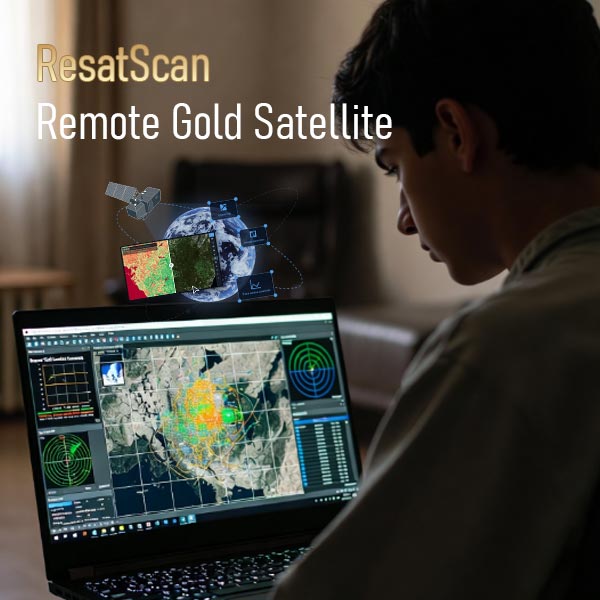
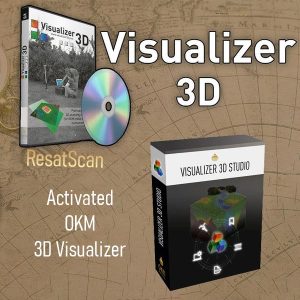
Remote Gold Satellite Scanner Software for PC
660,00 $
Unlock powerful remote treasure detection with Windows Satellite Treasure Scanner Software – no expensive metal detector needed!
Perform professional 3D underground scans from anywhere using real NASA satellite data. Detect gold, silver, precious metals, hidden cavities, tunnels, paths to treasure chambers, and ancient burial sites up to 25–30 meters deep.
In the realm of remote sensing and geophysical exploration, underground satellite scanning has revolutionized how we map and analyze subsurface features. This technology leverages advanced satellite data to detect hidden structures, resources, and anomalies beneath the Earth’s surface. Whether you’re a geologist, archaeologist, or hobbyist, using computers and laptops for underground satellite scanning offers accessible, powerful tools without the need for expensive field equipment. In this article, we’ll explore types of satellite scanning, key satellite names, the role of LIDAR and topography, and how to perform these scans efficiently on Windows-based systems.
Works like an advanced GPR (Ground Penetrating Radar) simulation – installs easily on any Windows computer, laptop, or notebook. Includes complete step-by-step video training (zero to expert), scan analysis guide, and dedicated support.
The package price covers only the exclusive professional training & interpretation method – the actual scanning programs are free to download worldwide. Perfect for treasure hunters, archaeologists, and serious prospectors. Start your remote discoveries today! 🚀
What is Underground Satellite Scanning?
Underground satellite scanning refers to the process of using satellite imagery and remote sensing data to infer or directly image subsurface layers. Unlike traditional ground-based methods, this approach relies on orbital platforms to capture data over vast areas. By processing this information on computers or laptops, users can generate detailed models of underground features such as cavities, mineral deposits, and archaeological sites.
Key to this is the integration of various data types, including multispectral imagery, radar signals, and elevation models. For instance, satellites equipped with Synthetic Aperture Radar (SAR) can penetrate shallow soil layers to reveal buried structures, while optical sensors provide contextual surface data.
Types of Satellite Scanning for Subsurface Analysis
There are several types of satellite scanning techniques tailored for underground exploration. Understanding these can help you choose the right method for your project:
- Radar-Based Scanning (e.g., SAR and InSAR): Synthetic Aperture Radar (SAR) uses microwave signals to penetrate clouds and vegetation, offering insights into subsurface topography. Interferometric SAR (InSAR) measures ground deformation, which can indicate underground voids or shifts.
- Optical and Multispectral Scanning: This involves analyzing visible and infrared light to detect surface anomalies that hint at underground features, such as soil moisture variations signaling buried rivers or ruins.
- Hyperspectral Scanning: Captures data across hundreds of spectral bands to identify mineral compositions underground, useful for resource exploration.
- Thermal Infrared Scanning: Detects heat signatures that may reveal geothermal activity or hidden cavities.
- Gravimetric and Magnetic Scanning: Satellites measure gravitational and magnetic fields to map subsurface density variations, aiding in oil, gas, or mineral detection.
These types of satellite scanning can be combined for comprehensive results, all processed via software on your computer or laptop.
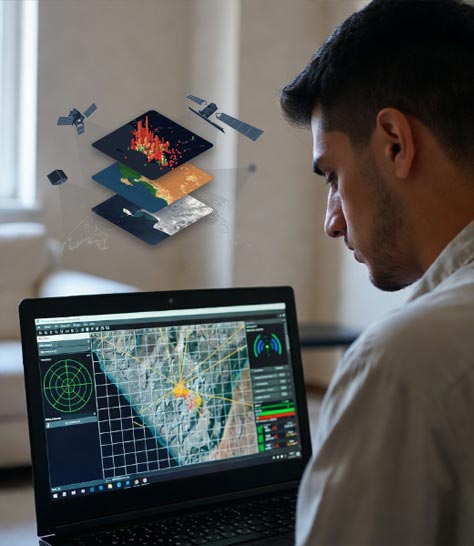
Prominent Satellites Used in Underground Scanning
Several satellites from space agencies like NASA, ESA, and others provide the raw data for underground analysis. Here are some key names and their contributions:
- NASA’s Landsat Series: Landsat 8 and 9 offer high-resolution multispectral imagery for topography mapping and change detection, essential for identifying potential underground sites.
- Sentinel-1 (ESA): Equipped with SAR, it’s ideal for all-weather subsurface penetration, detecting features up to several meters deep.
- Terra and Aqua (NASA): These use MODIS instruments for thermal and optical data, helping in topography analysis and anomaly detection.
- GRACE-FO (NASA/ESA): Focuses on gravity measurements to reveal large-scale underground water reservoirs or geological structures.
- ALOS-2 (JAXA): Advanced SAR capabilities for detailed topography and subsurface mapping in forested or urban areas.
By downloading free datasets from these satellites via platforms like USGS Earth Explorer or ESA’s Copernicus Hub, you can import them into desktop software for processing.
The Role of LIDAR in Underground Satellite Scanning
LIDAR (Light Detection and Ranging) is a game-changer in satellite-based scanning. While traditionally airborne, spaceborne LIDAR systems like NASA’s ICESat-2 provide global elevation data with centimeter accuracy. This technology emits laser pulses to measure distances, creating precise topography models.
In underground contexts, LIDAR helps by:
- Generating Digital Elevation Models (DEMs) that reveal surface depressions indicating sinkholes or buried structures.
- Combining with SAR data for enhanced subsurface inference.
- Supporting vegetation penetration to expose hidden topography features.
On computers and laptops, tools like QGIS or ArcGIS process LIDAR data, allowing users to simulate underground layers based on topographic variations.
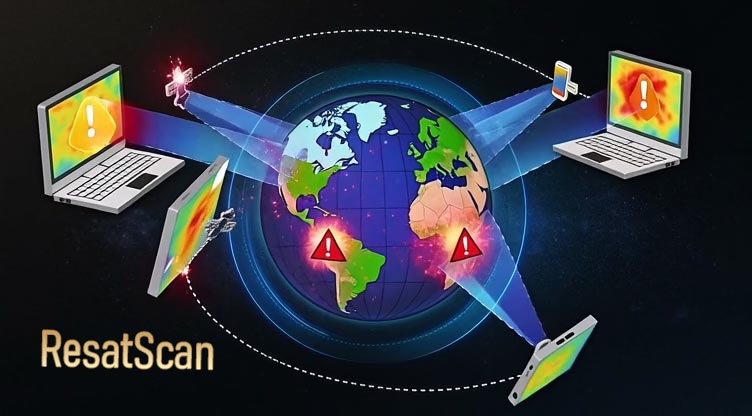
Topography Mapping and Its Importance in Subsurface Exploration
Topography, the study of Earth’s surface shape and features, is foundational to underground satellite scanning. High-resolution topographic data from satellites helps predict subsurface geology. For example:
- Digital Terrain Models (DTMs): Strip away vegetation to show bare-earth topography, useful for spotting erosion patterns that suggest underground tunnels.
- Integration with Geophysical Data: Combining topography with magnetic or gravity scans refines models of buried resources.
Software on Windows laptops, such as Global Mapper or ENVI, enables users to overlay topographic layers with satellite scans for 3D visualizations.
How to Perform Underground Satellite Scanning on Computers and Laptops
Getting started with underground satellite scanning is straightforward with the right setup:
- Download Satellite Data: Access free repositories from NASA or ESA. Use tools like Google Earth Engine and Google Earth for cloud-based processing if your laptop has limited storage.
- Install Processing Software: Opt for open-source options like QGIS (supports LIDAR and topography), SNAP (for Sentinel data), or proprietary ones like MATLAB for advanced simulations.
- Define Your Scan Area: Input coordinates for your target region. Software will fetch and process data from chosen satellites.
- Apply Filters and Analysis: Use algorithms to enhance subsurface visibility, such as edge detection for cavities or spectral analysis for minerals.
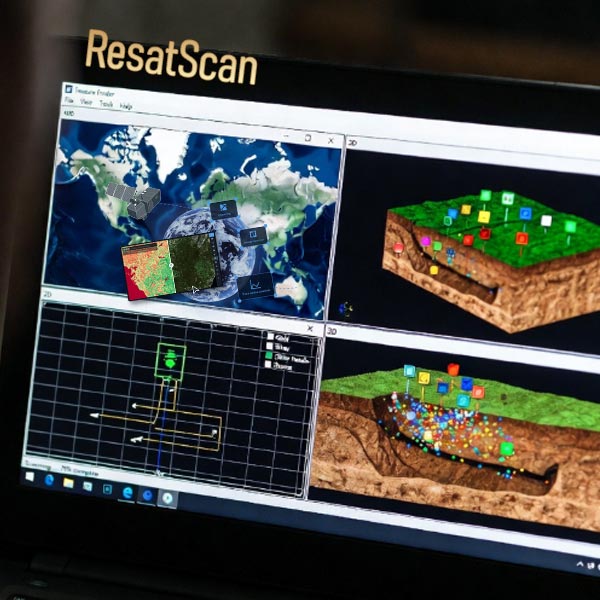
- Visualize Results: Generate 2D/3D models showing layers, anomalies, and depths—up to 30 meters in some radar-based methods.
This process works seamlessly on Windows, macOS, or Linux systems, making it ideal for remote analysis without fieldwork.
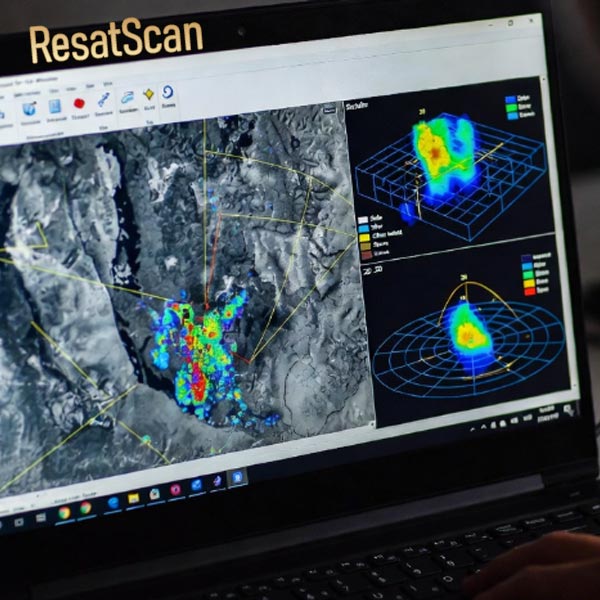
Advantages of Computer-Based Satellite Scanning
- Cost-Effective: No need for pricey hardware; leverage free satellite data and open-source software.
- Remote Accessibility: Scan global locations from your laptop, perfect for preliminary surveys.
- Depth Capabilities: Advanced techniques like GPR-inspired satellite methods can probe up to 25-30 meters.
- Versatility: Detect metals, voids, tunnels, and more, akin to professional geophysical tools.
Common Questions About Underground Satellite Scanning
How Deep Can Satellite Scanning Go?
Depending on the type, depths range from shallow ( 1-25 meters) to deeper inferences (gravity: kilometers). For precise underground imaging, combine with topography and LIDAR.
Do I Need to Pay for Satellite Access?
No—most data from NASA satellites like Landsat is free. Software downloads are also often gratis, with tutorials available online.
Are There Limitations?
Satellite scanning excels in broad-area mapping but may require ground validation for accuracy. Urban interference or dense vegetation can limit results, though LIDAR helps mitigate this.
In conclusion, underground satellite scanning with computers and laptops democratizes geophysical exploration. By harnessing types of satellite scanning, data from satellites like Landsat and Sentinel, and technologies such as LIDAR and topography, anyone can uncover Earth’s hidden secrets. Start your journey today with free tools and datasets for endless discovery.
Be the first to review “Remote Gold Satellite Scanner Software for PC”
Related products
Reviews
There are no reviews yet.